Myth Busted: Does Shaving Your Dog Really Keep Them Cool in Summer?
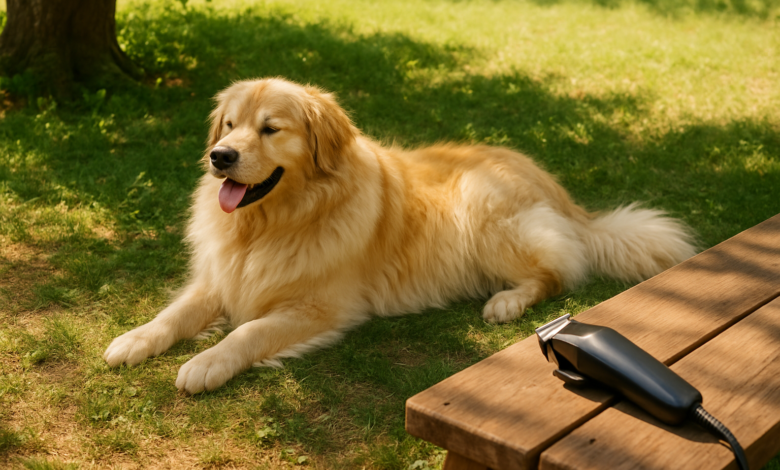
When temperatures soar, many well-meaning dog owners reach for the clippers, convinced that removing thick fur will help their pet stay cool.
For double-coated breeds, however, experts say this common summer practice is based on a misunderstanding — and in some cases, it can actually make dogs more uncomfortable.
What A Double Coat Really Does
Breeds like Huskies, German Shepherds, Golden Retrievers, Australian Shepherds, Collies, and many Spitz-type dogs have what’s known as a double coat, a system designed by nature to regulate temperature year-round.
The first layer is a dense, soft undercoat that traps air close to the skin, acting as insulation. The second layer consists of longer, coarser guard hairs that repel water, dirt, and help block harmful UV rays.
In warmer months, these dogs naturally shed much of their undercoat. This seasonal “blow” allows air to circulate down to the skin while the outer coat continues to provide shade and protection.
Groomers and veterinary professionals often describe it as built-in climate control — one that works in both heat and cold.
Does Shaving A Double Coat Actually Help?
In most cases, no — and it can introduce new problems.
Cutting away the guard hairs removes the dog’s natural sun protection, exposing pale or lightly pigmented skin to sunburn and irritation.
Without the insulating air layer created by the undercoat, some dogs can actually feel hotter, not cooler.
There is also the risk of permanent coat damage.
Repeatedly shaving a double-coated dog can cause fur to grow back unevenly, patchily, or with a different texture, sometimes failing to return to its original condition at all.
Animal welfare organizations and veterinary groups consistently note that shaving does not prevent heatstroke.
Proper cooling, hydration, shade, and sensible activity levels matter far more than coat length.
When Shaving May Be Necessary
There are limited situations where clipping a double-coated dog may be recommended, but usually for health, not comfort.
Severe matting that cannot be brushed out humanely may require shaving to prevent pain or skin infections.
Certain medical conditions or surgical procedures can also necessitate localized clipping.
In some cases, groomers may perform small hygienic trims in targeted areas, such as around severe hot spots.
Even then, professionals advise against shaving down to the skin unless absolutely necessary, and only for the shortest duration and smallest area required.
Safer Ways To Keep Double-Coated Dogs Cool
Instead of shaving, experts recommend working with the coat, not against it.
Regular, thorough brushing during shedding season helps remove loose undercoat and improves airflow.
Professional deshedding treatments can be especially effective, clearing dead fur without damaging protective guard hairs.
Environmental management is just as important.
Providing constant access to shade and fresh water, avoiding strenuous activity during peak heat, and using cooling aids like mats, shallow paddling pools, fans, or air-conditioned spaces can significantly reduce heat stress.
So, Is The Summer Shave A Myth?
For most double-coated dogs, yes.
The idea that shaving keeps them cooler is largely false.
Their coat is not just extra fluff — it is a carefully balanced system that insulates, shades, and protects.
Removing it often creates more risks than benefits, without meaningfully improving heat tolerance.
For the average double-coated companion, smart grooming, proper brushing, and thoughtful summer management are far safer, and far more effective, than a full shave.